Roofs Stabilized Before More Damage Occurs
Emergency Tarping and Repairs in Lawrenceville for roofs compromised by storm damage and active leaks
Northwest Georgia storms arrive with wind, hail, and heavy rain that tear shingles loose, puncture roofing materials, and send tree branches through attic spaces. Legacy Roofing LLC handles emergency tarping and repairs for residential and commercial properties in Lawrenceville when roofs fail suddenly and water begins entering occupied buildings. The difference between calling within hours of damage and waiting days shows up in ceiling stains, insulation saturation, and whether structural framing stays dry enough to avoid replacement.
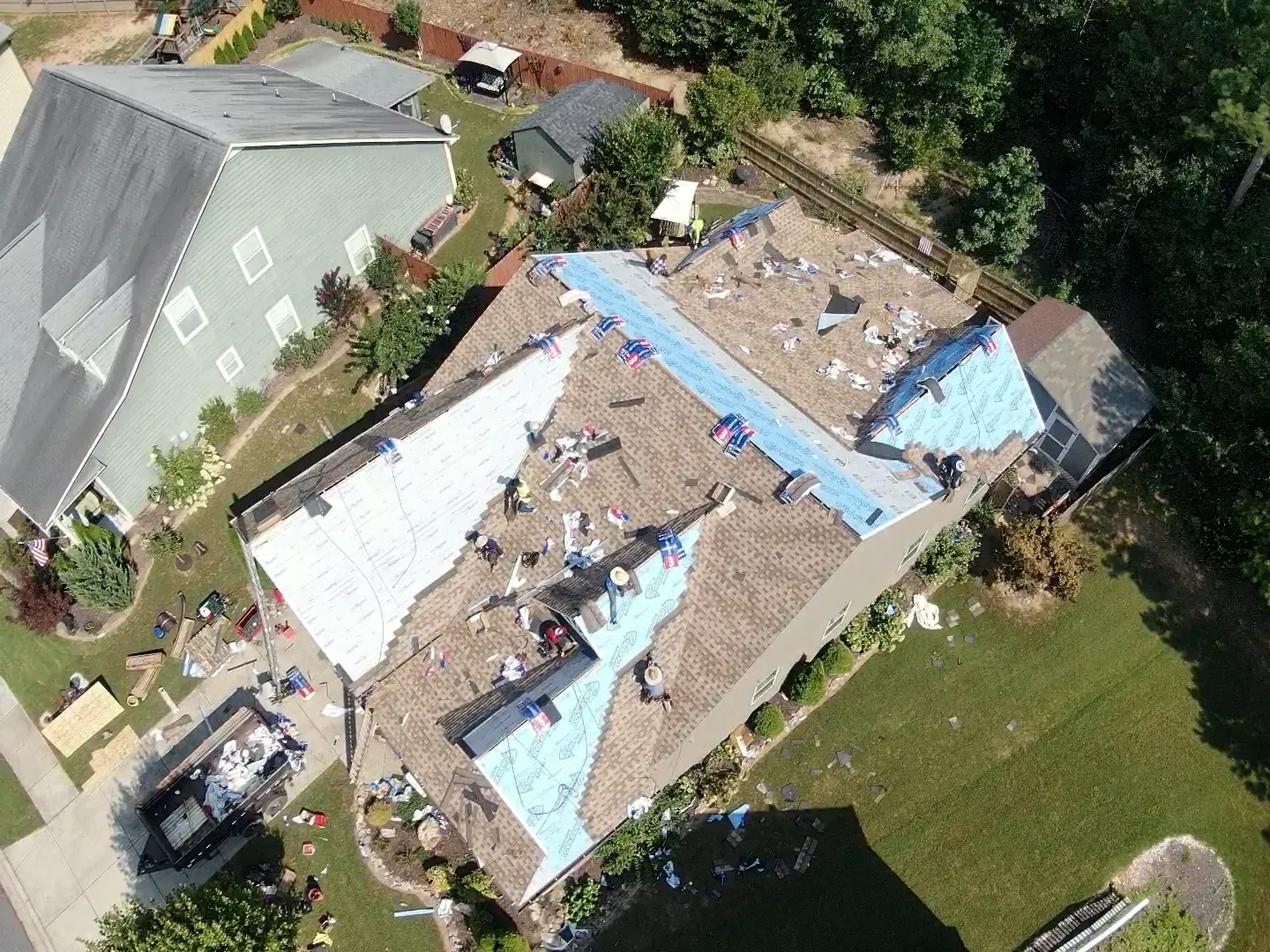
Emergency tarping creates a waterproof barrier over compromised roof sections while permanent repair plans are developed. Tarps are anchored using methods that prevent wind uplift without creating additional penetrations, and coverage extends beyond damaged areas to ensure water cannot migrate under edges during subsequent rain events.
Request an emergency response evaluation to assess immediate roof stabilization needs and prevent further interior damage.
What Happens During Emergency Roof Stabilization
Insurance claims assistance starts with a detailed roof inspection that looks for specific types of storm damage: shingle granule loss and bruising from hail, lifted or torn membrane sections from wind, damaged flashings around penetrations, and dented or punctured metal components. Photographs must show the damage clearly with context that establishes location and extent, because insurance adjusters rely on visual evidence to determine whether the damage qualifies for coverage. The inspection also identifies pre-existing conditions that aren't covered by storm damage claims, which helps set accurate expectations about what repairs the insurance will approve.
After the inspection, Legacy Roofing LLC compiles a damage report that includes photographs, measurements, material assessments, and recommendations for repair or replacement based on the extent and type of damage found. This documentation accompanies the insurance claim and provides the technical detail adjusters need to evaluate coverage accurately. The process reduces stress for property owners by handling technical communication with insurance companies, explaining coverage decisions in plain language, and coordinating repair timelines once claims are approved.
Claims assistance also includes identifying damage that might not be immediately obvious—such as underlayment failures beneath intact shingles, fastener pull-through on flat roofs, or structural issues caused by water intrusion—because catching these problems during the initial claim prevents the need for supplemental claims later. Properties throughout Lawrenceville benefit from inspections that document the full scope of storm damage rather than just surface-level issues.
What Homeowners Ask About Emergency Roofing
Homeowners and business owners facing storm damage in Lawrenceville often have questions about how the claims process works and what affects approval outcomes.
How quickly can emergency tarping be completed after storm damage occurs?
Response timing depends on call volume during widespread weather events, but tarping typically happens within hours of contact during isolated incidents and within one to two days following storms that affect multiple properties across Lawrenceville and surrounding communities.
What keeps tarps secured during additional high wind events?
Tarps are anchored using battens screwed into solid roof decking along undamaged sections, with reinforced grommets distributing tension and preventing tear-through when wind loads increase during subsequent storms common in Northwest Georgia.
Why does water still appear inside after tarping is finished?
Existing saturation in insulation, drywall, and framing continues releasing moisture for days after roof breaches are sealed, so interior dampness may persist even though no new water is entering the building.
When should permanent repairs begin after emergency stabilization?
Permanent work starts after insurance adjusters inspect damage, moisture levels inside building cavities return to acceptable ranges, and weather forecasts allow multi-day roofing operations without interruption from rain.
What documentation is provided after emergency tarping services?
You receive photos of damage before and after tarping, an outline of temporary measures installed, and preliminary observations about what permanent repairs will likely involve based on visible structural compromise and material failure patterns.
Legacy Roofing LLC responds to roofing emergencies throughout Lawrenceville when immediate stabilization prevents ongoing damage to building interiors and structural components. Arrange an emergency inspection to secure compromised roof sections and develop a permanent repair plan based on actual conditions.