Repairs That Keep Business Operations Running
Commercial Roof Repairs in Lawrenceville for leak detection, membrane damage, and storm-related failures
A roof leak in a commercial building doesn't just damage ceilings and insulation—it disrupts daily operations, threatens inventory, and creates liability concerns when water reaches customer areas or workspaces. Commercial roof repairs address these failures quickly to minimize business interruptions and prevent minor issues from escalating into costly structural damage. Legacy Roofing LLC services retail buildings, offices, warehouses, and other commercial properties throughout Northwest Georgia, responding rapidly when property managers report active leaks, membrane punctures, or storm damage to flat roofing systems.
Flat roofing systems, TPO roofing, and EPDM roofing installations common on commercial buildings require different repair techniques than residential sloped roofs. Membrane seams can separate under thermal stress, drainage systems can clog and cause ponding, and foot traffic or equipment installations can puncture waterproof layers. Routine repairs extend roof lifespan and reduce long-term operational costs by addressing small failures before water infiltrates insulation and decking.
Schedule a commercial roof inspection to identify leak sources, evaluate membrane condition, and assess drainage performance.
How Repairs Address Membrane and Drainage Issues
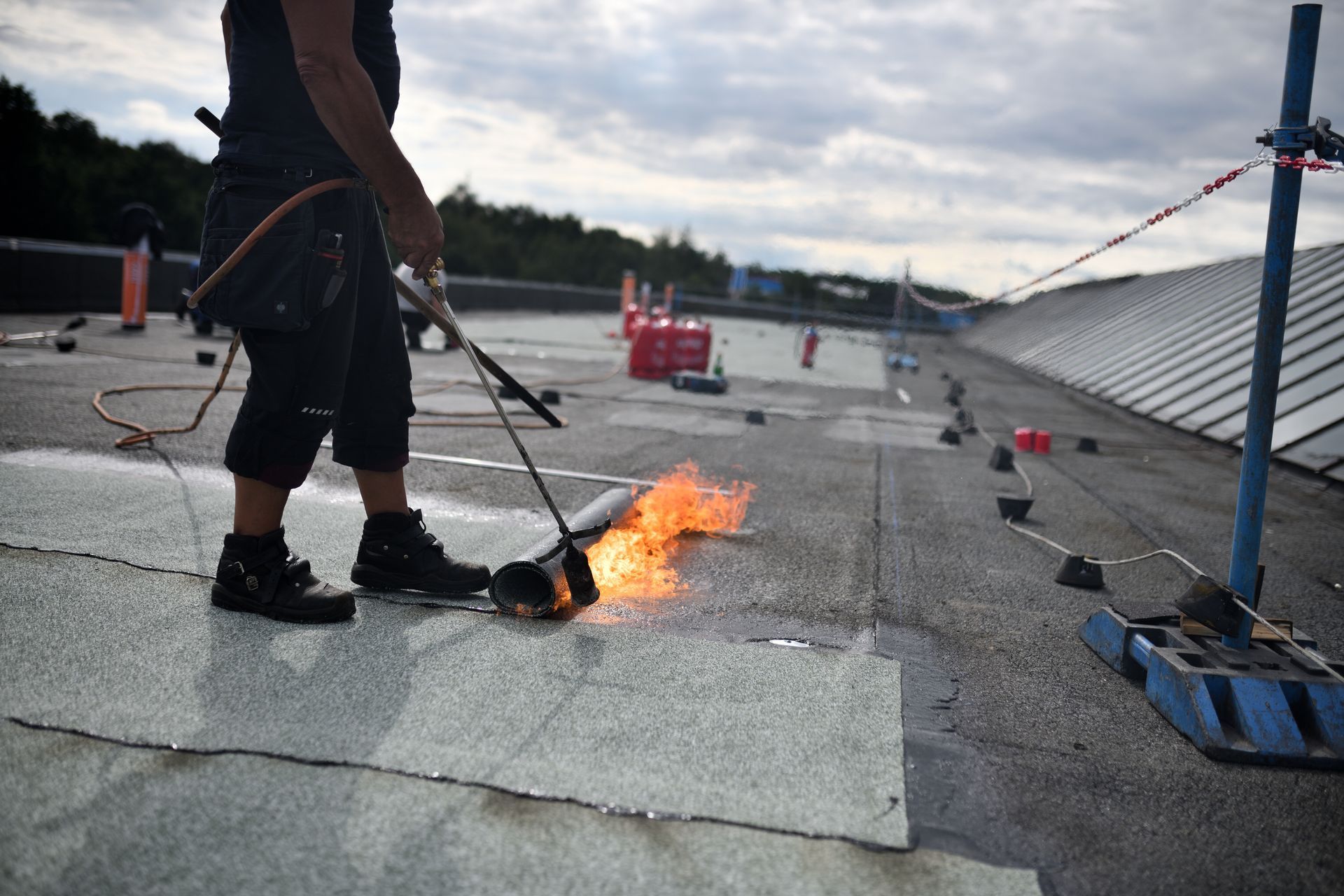
Commercial roof repair begins with leak detection that locates the entry point, which often sits far from where water appears inside the building due to lateral flow along decking or structural members. Inspections reveal whether damage stems from punctures, seam failures, flashing deterioration, or drainage blockages that allow water to pond and saturate roofing materials. TPO and EPDM membranes are repaired using heat welding or adhesive patches depending on the material type and the size of the compromised area.
After repairs, water drains properly through scuppers and interior drains without pooling in low spots, membrane seams remain sealed during temperature swings, and punctured areas are patched to restore continuous waterproofing. Interior ceiling damage stops spreading, insulation stays dry to maintain energy efficiency, and business operations continue without the need for tarps, buckets, or restricted access to affected areas. Property managers see documented repair work that supports maintenance records and helps plan future budgets.
Preventative maintenance solutions include scheduled inspections that catch hidden moisture damage before leaks become visible, drainage cleaning to prevent clogs during heavy rain, and seam evaluations to identify early signs of adhesive failure or thermal stress. These services reduce emergency repair calls and extend the functional life of the roofing system by addressing wear patterns before they cause failures.
What Property Owners Usually Ask
Questions about response times, repair methods, and maintenance planning arise when commercial property managers evaluate roofing contractors.
How quickly can Legacy Roofing LLC respond to an active commercial roof leak?
Fast response times prioritize minimizing business disruptions, with many emergency repairs scheduled within 24 hours to stop water intrusion and protect interior spaces from ongoing damage.
What roofing systems are most common on commercial buildings in Lawrenceville?
Flat roofing systems using TPO or EPDM membranes dominate commercial construction in Northwest Georgia due to cost efficiency, ease of installation on large roof planes, and compatibility with rooftop equipment.
Why do commercial roofs develop leaks even without visible storm damage?
Thermal cycling causes membrane seams to contract and pull apart, foot traffic creates small punctures that grow over time, and clogged drains allow water to pond until it finds weak points in flashing or seams.
When should a commercial roof be repaired versus replaced?
If damage is localized and the membrane is less than 15 years old with no widespread deterioration, targeted repairs cost less and extend the system's life without the expense and disruption of full replacement.
What does a commercial roof inspection include?
Inspections involve walking the roof to check membrane condition, testing seams and flashing, evaluating drainage function, using moisture meters to detect hidden leaks, and documenting areas that require immediate repair or monitoring.
Legacy Roofing LLC provides detailed inspection reports that help property managers plan budgets, prioritize repairs, and maintain roofing systems that protect building operations year-round. Contact us to arrange a commercial roof inspection and receive a repair estimate based on your building's specific needs and current roof condition.